
Practical Parenting Your Pre-Schooler In 2026
Perspectives, Proof, and the Point of It All
What does it mean to raise a good child—not just a healthy one? That is the real question beneath nearly every preschool parenting fight: feeding, sleep, discipline, screens, tantrums, milestones, and toilet training. Modern parenting culture often narrows the lens. Medicine focuses on physical health. Therapy focuses on emotional safety. Social media rewards whatever is vivid, emotional, or shareable. But parents are usually reaching for something larger: a child who is healthy and good, emotionally capable and morally formed, independent and caring toward others.
Health matters. But the bigger goal is raising a child who can thrive, live with others, and grow into a good person.
Some parenting claims are strongly supported by evidence. Others are not. This article distinguishes between them rather than treating all advice as equally grounded.
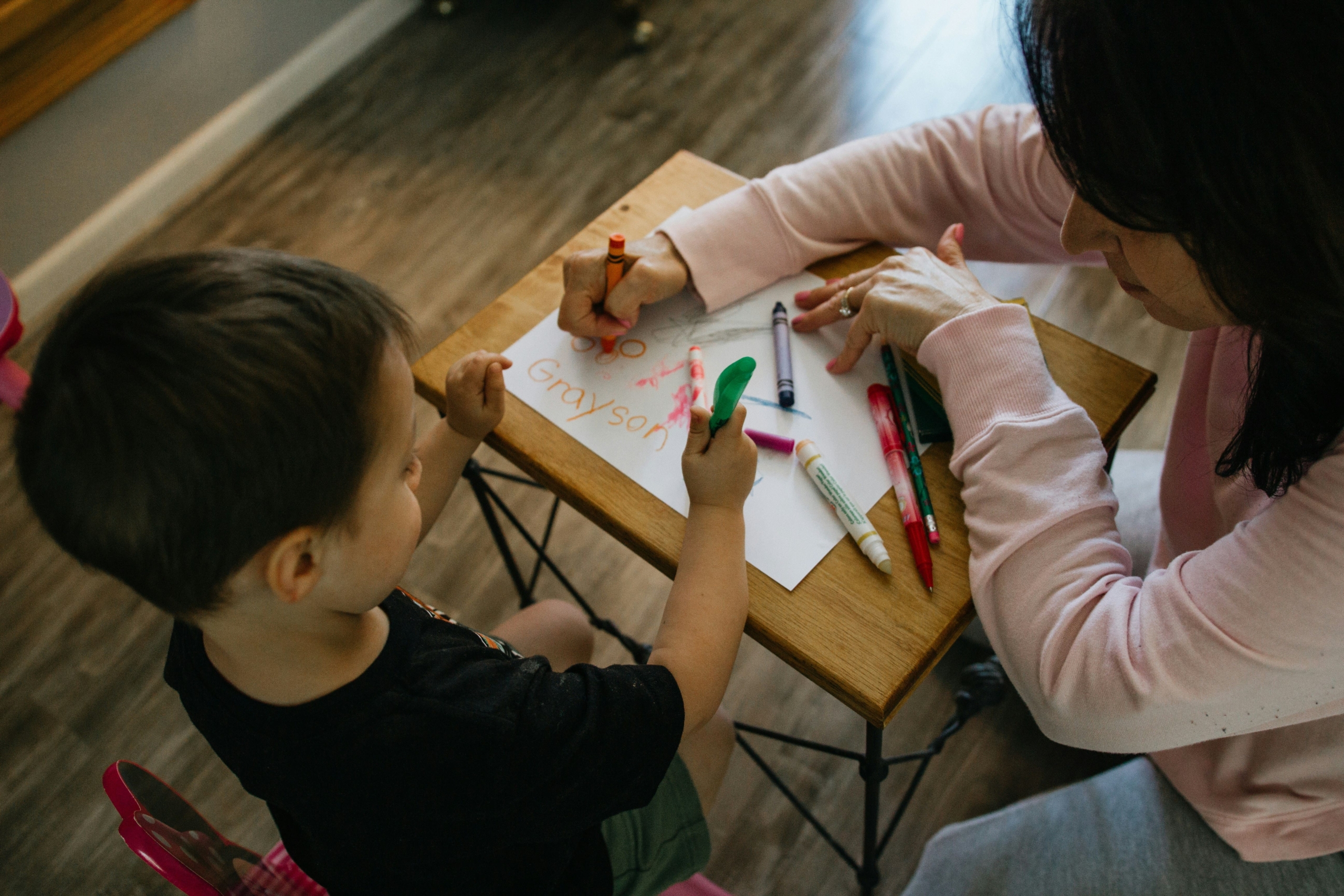
“Health matters. But the bigger goal is raising a child who can thrive, live with others, and grow into a good person.”
You are raising a child in a world that is louder, faster, and more digitally saturated than many parents expected. The same phone that gives you evidence-based guidance also delivers guilt, panic, and strangers’ opinions. That makes clarity more valuable than ever. The best parenting is usually neither permissive nor harsh. It is warm, intentional, and morally clear.
Parenting advice is also shaped by predictable biases. Therapeutic culture can overweight emotional safety and underweight moral direction. Social media optimizes for alarm, not balance. App developers overclaim educational benefits. Online parenting communities often treat anecdote as evidence. None of those are neutral forces, and good judgment starts by recognizing them.
Two truths at once
One of the biggest mistakes in current parenting culture is treating emotional support and moral instruction as opposites. They are not. Preschoolers need both understanding and direction. They are immature, impulsive, and still learning self-control. That means many behaviors are developmentally normal. It does not mean they are acceptable. A child can be acting their age and still need correction.
This is where the Josephson framework matters. Values are not absorbed by magic. They are taught through what adults name, model, require, and tolerate. The Six Pillars of Character—Trustworthiness, Respect, Responsibility, Fairness, Caring, and Citizenship—remain a useful compass because they connect daily parenting decisions to long-term moral formation.1 The practical framework is straightforward: teach the value by name, explain why it matters, model it yourself, and respond when the rule is broken.2
That does not mean shaming children. Healthy guilt says, “I did something wrong and should repair it.” Shame says, “I am bad,” and shame makes growth harder. The goal is an internal conscience, not fear-based obedience. Warmth without standards becomes indulgence. Standards without warmth become fear. The goal is both.
“Not every normal behavior is acceptable behavior. Preschoolers need both understanding and moral direction.”
These years are the work
The preschool years are not only about surviving chaos. They are years of formation. Children are learning how to wait, how to tell the truth, how to respond to frustration, how to handle limits, how to treat other people, and how to live inside a family. Those lessons are not extra. They are the work.
That is why discipline matters. The strongest evidence concerns what not to do: harsh physical punishment is associated with increased aggression, worse mental health outcomes, and damaged trust.3 The American Academy of Pediatrics opposes corporal punishment and supports positive discipline built around clear expectations, consistent follow-through, and calm consequences.³
But positive discipline should not be mistaken for the disappearance of authority. Authority is not cruelty. Preschool children need limits, brief consequences, and predictable follow-through. They cannot process long lectures in the heat of conflict. They can understand simple cause and effect. A parent who says, “Stop throwing the toys,” and then backs down may think that is kindness. Often it is confusion.
Time-out remains controversial in popular culture, but the evidence does not support the blanket claim that it is harmful when used correctly: briefly, calmly, connected to the behavior, and followed by reconnection.³ At the same time, children with trauma histories, sensory differences, or certain developmental conditions may need modified approaches. Good parenting is principled, but it is not mechanical.
Both things are true
Tantrums, meltdowns, and emotional explosions are among the most demoralizing parts of parenting young children. Here too, modern advice often confuses parents by collapsing two truths into one. Feelings are valid. Behaviors have limits. These things coexist.
Tantrums peak roughly between 18 months and 3 years, when the brain systems involved in impulse control are still immature.4 That is biology, not proof of bad parenting. Emotion coaching—naming feelings, staying calm, helping children put words to frustration—has meaningful support in the research literature.5
The best-supported insight from the gentle-parenting movement is that naming feelings can reduce distress and improve cooperation over time. But some versions of that approach go further than the evidence does, implying that any meaningful consequence is harmful or that validation must always come before firm limit-setting. That framing is too simple—and the evidence does not support it.
If a child is screaming and throwing objects, the first task is safety and limit-setting. Naming the feeling matters, but so does stopping the behavior. Parents should resist the idea that they must endlessly negotiate with a meltdown in progress. They should also resist the opposite mistake of treating every emotional outburst as defiance. The right question is not, “Should I validate or correct?” It is, “How do I do both?”
What’s really driving the chaos
Some parenting conflicts are not primarily moral conflicts. They are physiological or environmental conflicts that become moral ones if handled badly. Sleep is the clearest example. When a young child is chronically sleep-deprived, behavior worsens, learning suffers, and emotional regulation collapses. When a parent is chronically sleep-deprived, consistency collapses too. Sleep problems turn ordinary parenting into crisis management.
Preschoolers typically need 10 to 13 hours of sleep per day, and the effects of sleep deprivation—behavioral, cognitive, and emotional—are among the better-documented findings in child development.6 Consistent bedtime routines are among the best-supported interventions available. Online culture often treats sleep training as cruelty, but the evidence does not support claims of lasting harm from graduated sleep training used appropriately in healthy children.7 Chronic sleep deprivation has better-documented harms than sleep training does.
Many families face real constraints around sleep: work schedules, housing arrangements, daycare timing, lack of paid leave, and single-parent exhaustion. Those are not moral failures. They are realities. The point is not to pretend every family has perfect control. It is to say that whenever a stable sleep routine is possible, it is worth protecting. Screens create a similar distortion. Parents are told screens cause autism, ADHD, and brain damage. Those claims go far beyond the evidence. The more defensible concern is displacement.
The main risk is not just the screen itself. It is what the screen replaces: sleep, conversation, boredom, outdoor play, free play, and the slow work of learning to tolerate frustration. The American Academy of Pediatrics discourages routine screen use before 18 months except video chatting and advises roughly one hour a day of high-quality content for ages 2 to 5, ideally with co-viewing.8
The least discussed screen issue may be the parent’s own phone. Divided attention is not neutral. It teaches children what attention looks like.
Food is another battleground where fear often outruns evidence. Picky eating in preschoolers is common and largely driven by food neophobia—normal caution around unfamiliar foods. Research suggests it tends to peak between ages 2 and 6 and often moderates with age, especially when families avoid pressure.9 The better strategy is structure without coercion: parents and caregivers decide what and when food is offered; children decide how much to eat. Pressure, pleading, and nightly “one more bite” battles usually worsen the problem.
Each of these daily routines—sleep, screens, and food—is also a site of moral formation. They teach self-control, responsibility, fairness, and the ability to live with delayed gratification. Logistics and character are not separate. They are often the same work.
When fear outruns evidence
Much modern parenting anxiety comes from the collision of real evidence with exaggerated claims. Breastfeeding is a good example. The strongest benefits are in early infancy. After the first year, for well-nourished children in settings with clean water and safe formula, the measurable advantages are more modest.10 The American Academy of Pediatrics supports breastfeeding for two years and beyond if it is mutually desired by parent and child.11 But “mutually desired” matters. A parent who is in pain, exhausted, or resentful is not failing if they stop. Formula is a safe, regulated, nutritionally adequate alternative. No legitimate guilt is owed.
Many parents and caregivers also face structural constraints around feeding—limited leave, no workplace accommodation, infant care arrangements that make pumping hard, or lack of access to lactation support. Those constraints are real, and responding to them practically is not a moral failure.
Toilet training reveals the same pattern. It has become a test of parental competence, when in fact it is a readiness-based developmental task. Most children are ready between 18 and 36 months, with wide normal variation.12 Pressure and shame make the process worse. A child who resists may be asserting control, not showing pathology. The goal is not simply dryness. It is helping a child master a self-care skill without humiliation.
Developmental milestones create perhaps the deepest anxiety of all. Screening tools are not diagnoses. But “wait and see” has a real cost when delays are involved, and early intervention improves outcomes for many children with developmental or language delays.13 Autism identification rates have risen sharply in recent years, and whether that reflects better detection, broader criteria, or genuine prevalence change remains scientifically unsettled.14 What is not unsettled is this: if a child has lost words or gestures, or if teachers and caregivers who see many children are raising consistent concerns, those signals deserve prompt attention. Seeking an evaluation is not surrendering to panic. It is an act of responsibility and caring.
The point of all of it
The best evidence does not support perfectionism. It supports intentionality. Most ordinary parenting decisions are recoverable. What matters most is not any single perfect practice but the presence of a warm, consistent, values-driven parent.
That reassurance should not become complacency. Some things genuinely deserve prompt attention: unsafe infant sleep, developmental delays, harsh or punitive discipline, and persistent medical or behavioral concerns that are not followed up. But in most of family life, the larger question is still the right one: not “What will make this moment easier?” but “What kind of person am I helping this child become?”
That is the point of practical parenting. Not merely getting through the day, but shaping a child who can eventually govern themselves, tell the truth, treat others fairly, and live well with other people.
Endnotes
- Josephson Institute of Ethics. “The Six Pillars of Character.” josephsoninstitute.org, updated 2025. ↩︎
- CHARACTER COUNTS! “Model Standards for Education.” Josephson Institute, January 2025. ↩︎
- American Academy of Pediatrics. “Effective Discipline to Raise Healthy Children.” Pediatrics 142, no. 6 (2018). See also: Gershoff, Elizabeth T., and Andrew Grogan-Kaylor. “Spanking and Child Outcomes: Old Controversies and New Meta-Analyses.” Journal of Family Psychology 30, no. 4 (2016): 453–469. ↩︎
- Diamond, Adele. “Executive Functions.” Annual Review of Psychology 64 (2013): 135–168. ↩︎
- Gottman, John M., Lynn Fainsilber Katz, and Carole Hooven. “Parental Meta-Emotion Philosophy and the Emotional Life of Families.” Journal of Family Psychology 10, no. 3 (1996): 243–268. ↩︎
- American Academy of Sleep Medicine. “Recommended Amount of Sleep for Pediatric Populations.” Journal of Clinical Sleep Medicine 12, no. 6 (2016): 785-786. (Editor’s note: upgraded from placeholder). ↩︎
- Mindell, Jodi A., et al. “Behavioral Treatment of Bedtime Problems and Night Wakings in Infants and Young Children.” Sleep 29, no. 10 (2006): 1263–1276. See also: Gradisar, Michael, et al. “Behavioral Interventions for Infant Sleep Problems.” JAMA Pediatrics 170, no. 5 (2016): 423–431. ↩︎
- American Academy of Pediatrics. “Media and Young Minds.” Pediatrics 138, no. 5 (2016). (Reaffirmed 2024). ↩︎
- Dovey, Terence M., et al. “Food Neophobia and ‘Picky/Fussy’ Eating in Children: A Review.” Appetite 50, no. 2–3 (2008): 181–193. ↩︎
- Eidelman, Arthur I., and Richard J. Schanler. “Breastfeeding and the Use of Human Milk.” Pediatrics 129, no. 3 (2012): e827–e841. ↩︎
- American Academy of Pediatrics. “Breastfeeding and the Use of Human Milk.” Pediatrics 150, no. 1 (2022): e2022057988. (Editor’s note: source upgraded to formal 2022 policy citation). ↩︎
- Stadtler, Ann C., et al. “Perceptions of Readiness for Toilet Training.” Pediatric Nursing 25, no. 4 (1999). ↩︎
- Guralnick, Michael J. “Early Intervention for Young Children with Developmental Delays.” Infants and Young Children 32, no. 3 (2019). ↩︎
- Centers for Disease Control and Prevention. “Autism Spectrum Disorder: Data and Statistics.” ADDM Network Surveillance Report, 2025. ↩︎
Leave a Reply
Want to join the discussion?Feel free to contribute!